
31 Oct 2025
Investment: What is Value Investing?
Value investing is an approach to investments that looks to identify undervalued companies, perhaps with underappreciated financial strength. The origins of this go back to Benjamin Graham, and his seminal book, “The Intelligent Investor”, which was published in 1949. One of his most famous disciples in this investing approach is Warren Buffet.

Typically, value investing starts from evaluating the financial statements and data of a target investment, seeking companies with a low price-to-earnings ratio – meaning that the share price is a lower multiple of the current or expected earnings of the company. By contrast, ‘growth’ investing typically involves buying shares of companies at a price that is a high multiple of the current earnings – based on an expectation that the company will grow rapidly in the future.
Often growth type investments already have lots of excitement around them – either being specific companies and sometimes even whole sectors in which there is plenty of hype about the future prospects. By contrast, many very successful businesses may be seen by investors to be more ‘boring’, performing steadily, rather than skyrocketing suddenly. These are the sorts of companies and even sectors that a value investor will look to target – seeking to buy at a lower share price and then see their investment grow over time.
During bull markets (when most investors think share prices are likely to increase and are optimistic about the future), and also when interest rates are low, there is typically lots of enthusiasm among investors and growth investments tend to do very well. In short, greed and easy money push growth stocks. Value investments, by contrast, tend to do better during economic recoveries and periods of rising interest rates.
Research suggests that over the longer-term, value investing outperforms growth investing. Between 1974 and 2007 the MSCI Value Index delivered excess returns of over 260% against the MSCI Growth Index. However, value investing suffered during the financial crisis in 2008-09 and the low-interest rate years of the 2010’s saw blockbuster performance of growth type stocks – for example the largest tech companies, many of which were the superstar shares of the last 10-15 years.
The chart below from Dimensional Fund Advisers shows that value investing isn’t always for the faint-hearted – you can see from the grey bars that there have been a number of years where growth style investing has significantly outperformed value. However, for those who prefer data over sentiment, the longer-term historical picture has tended to favour value over growth (note the chart relates to US equities, but the same premium has been found consistently in other markets around the world).

An investment approach that tilts your portfolio toward less ‘exciting’ value-style investing, also reduces the risk that some companies have been over-hyped and might in fact be an investment bubble. When we see Nvidia shares selling at prices that are around 50x their annual earnings, or Microsoft priced at over 35x its earnings (both true as of September 2025) – these companies will need to deliver extraordinary and sustained growth to make good on those share prices. Or they may yet see a significant re-adjustment, or possibly even a fall from grace. We’ve noted elsewhere that even the world’s largest companies can rise and fall in spectacular fashion. So skewing or ‘tilting’ your portfolio somewhat toward value style investing is just another way of ensuring that you remain well-diversified and don’t get too greedy.

Key to any portfolio design is having a consistent and enduring investment philosophy that helps you ride out the days that test our resolve as investors. Our Hoe Bridge Wealth investment philosophy includes the lessons of history when it comes to portfolio construction, and we include a value-tilt (as well as tilts to other ‘factors’ which are likely over time to provide a more rewarding investor experience).
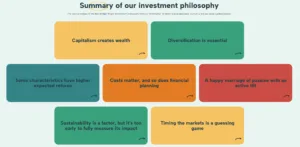
Read more about our investment philosophy here: https://hoebridgewealth.co.uk/who-we-are/our-investment-philosophy/
How do you avoid blindly following the investment herd to whatever destination? Might you be a value investor, perhaps without even realising it?
If you want to discuss your investments, or wider financial and retirement planning – book a free initial chat with me
https://calendly.com/duncan-bw-hoebridgewealth/30min
NOTE: The value of your investment can go down as well as up. Past performance is not a reliable indicator of future results. None of the above is financial or investment advice and you should speak to me or someone else professionally qualified to give you advice specifically tailored to your circumstances.


 Book a free introduction chat
 Production


