
30 Sep 2025
Thinking: Randomness, luck, and gratitude
Randomness, sometimes called chance or luck, plays a significant role in our lives – although sometimes we’re not culturally conditioned to acknowledge this. In his book, “The Random Factor”, Professor Mark Robert Rank, notes that Americans tend to discount the role of luck in their lives, believing instead in rugged individualism, whereas Europeans are much more likely to recognise chance as being important to economic or other outcomes. This has interesting impacts on our empathy, and perhaps shapes broader societal support for safety nets for those less fortunate.
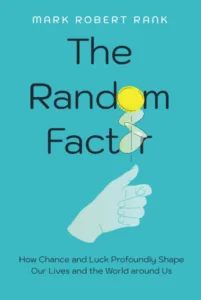
Acknowledging the importance of luck or random effects (1) over which we have no control, can help us to be more humble about our own successes, and also increase our sense of gratitude and appreciation for what we have. Considering, for example, that our very human existence required an asteroid to strike the earth at exactly the right angle 65 million years ago to wipe out the dinosaurs, allowing everything else that has transpired since, in order for us to be here today. Recognising randomness, and practicing appreciation ensures that we do not take the good things in our life for granted.
Practicing gratitude is linked to a variety of health benefits (2), including reduced anxiety and stress, better heart health, and improved sleep. It may also be connected to longer lifespan (3). A few simple exercises can help you to practice gratitude in your own life:
- Write it down – journalling or keeping a diary with reminders to yourself of something that went well,
- Redirect your thoughts – when something feels negative or frustrating, take a step back and redirect your thoughts to a positive aspect of the situation,
- Hit pause – next time you hear yourself say “thanks”, take a moment to stop and pinpoint exactly what you’re thankful for,
- Share – let someone else know why you are thankful for them, or encourage your family to share something at dinner that they’re grateful for.
Returning to the idea of randomness, it is also worth acknowledging that an entirely predictable or controllable world would be incredibly boring. Many great moments in life are not something we planned for. And recognising randomness does not mean simply leaving our future to fate. The journey of an investor is never predictable – and no-one can anyone say with certainty what will happen next. While good fortune is important, I like to remember a famous golfer Gary Player’s saying, “the more I practice, the luckier I get”. We can do our best to put ourselves in the right position: with a clear financial plan and a repeatable investment philosophy, and also an approach of gratitude to events that occur.
The point of financial planning isn’t simply to have more money. It’s to create a life, and moments in your life, that you can look back on with gratitude, and look forward to with excitement and appreciation.
What are you doing to put yourself in a position to feel grateful?
If you would like to discuss your plans for a successful and enjoyable retirement, including how you can best save and invest to afford the life you want – book a free initial chat together.
https://calendly.com/duncan-bw-hoebridgewealth/30min
None of the above is financial or investment advice and you should speak to me or someone else professionally qualified to give you advice specifically tailored to your circumstances.
LINKS
For more about the book – “The Random Factor”
1 – Link to article about luck or random effects
2 – Health benefits of gratitude
3 – Gratitude and longer lifespan
Download our free guide to retirement planning here: https://hoe-bridge-wealth.kit.com/guide-retirementplanning.


 Get in touch
 Production


