
26 Aug 2026
What about the things we don’t measure well?
Our modern world is very good at measuring a great many things. Capitalism is built around providing goods and services that are of value to others, and for which they are willing to pay. So companies rise and fall as their ability to provide value is multiplied, or diminishes. Market forces promote competition and result in widespread exchanges at clearly established prices. Similarly, countries measure their total output in various ways, and the goal is usually to grow and expand, which means that the collective efforts of the country are increasingly successful, and often translate into greater financial prosperity for its people.
But not all good things can be well measured. How much is a true friendship worth? How do we value a selfless act, or a moment of peaceful contemplation? Can we accurately score whether someone is kind or simply gets the job done? What price can we put on clean air or untouched wilderness? It is a great irony of our age that amidst hugely enhanced material comfort, and much improved health and longevity, there is also an apparent epidemic of loneliness or alienation, and a proliferation of self-centred values over a shared sense of our common humanity.
For investors, one of the great dilemmas of our modern capitalist age is that our accounting methods do not seem to factor in all of the variables very effectively. Countries and corporations are built on an ideal of endless growth. A goal which this century is likely to test, as it appears increasingly likely that more and more countries will in fact experience population decline. In itself this is hardly surprising as it parallels greater access to education and more freedom of choice for women all over the world. But we are still likely to experience productivity gains – and we will need them to support a much larger future aging population with fewer workers – and the expectation is that consumption on a per capita basis will continue to grow significantly as countries develop.
The long-term sustainability of life on earth is particularly poorly factored into quarterly profit targets or GDP growth statistics. There is currently very limited downside to unsustainable resource extraction, or conversion of historic wilderness into plantations or farmland. This is because we have tremendous difficulty putting an accurate value on species diversity and ecosystem sustainability, when most of our metrics are short-term and human-focused.
Ironically, we all know that for humans to flourish will require a living, adaptable planet to house us. Unless we subscribe to Elon Musk’s fantasies that we can just move on to another place and make a mess there instead.
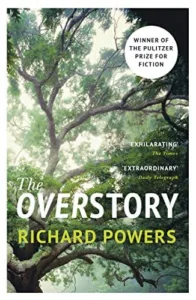
Richard Powers’ Pulitzer Prize winning novel, “The Overstory” is ostensibly about a collection of characters whose lives become intertwined, and also about trees, in all their wondrous varieties. But it is really a powerful reminder of how little we still know, let alone fully understand, about the natural world around us. The chemical and biological combinations produced by hundreds of millions of years of evolution in different plants, fungi, insects, bacteria, and other life forms, might yet hold the keys to solving a huge variety of problems – including curing diseases, or for example there may already be an existing natural solution to solve our plastic pollution issues. If only we weren’t in such a hurry – Powers likens humans to tiny insects moving so quickly that we can’t even see the life in things that live on a much longer timeline.
Powers reminds us of measures that really should haunt us. That the oldest individual trees in the world may be as much as 4,500 to 5,000 years old – although so few of these now remain. Replacing them will require millennia of careful preservation. There are trees whose root systems have continuously been producing new trees for as much as 9,500 years. The entire genus of our human ancestors has only existed for roughly two million years. Before human beings there were an estimated six trillion trees on earth, now there are three trillion, and if things continue this way, that number could be halved again within a hundred years. Too often, in our measuring, a tree is worth more as lumber, or fuel, or cleared for farmland, than it is left untouched (https://1trilliontrees.medium.com/the-silence-and-promise-of-intact-forests-970592c82811).
Human beings are inventive, and at times, ingenious. We are continuing to work on better ways to account for biodiversity, and to correctly calculate the costs of our impacts on a planet that supports and sustains our lives. Our investment philosophy at Hoe Bridge Wealth is based almost entirely on multiple decades of rigorous research around how to create effective, evidence-based portfolios. The one part of our philosophy that doesn’t have evidence quite so far back, is the tilt towards sustainability. Not least because this investment factor has not been available for very long, compared with the 100 years of American equities historical data. Nevertheless, the funds used in our portfolios for clients include some screening for carbon emissions intensity compared with peers in the same industry, as well as wider social and governance considerations. This is because we believe that a company with a lack of care and consideration for rigorous governance as well as effective monitoring and mitigation of carbon emissions, may well look to cut corners in other areas of the business too. An attitude that should make them a more risky investment compared with their peers.
F. Scott Fitzgerald famously said that a sign of a ‘first-rate intelligence’ is being able to function while holding two opposing ideas in your mind. Many other great thinkers have noted that reality is a messy thing, and uncertainty and doubt will always be part of reasoned thinking. Indeed, a total lack of doubt is often a warning sign! So in our own plans for life, we want to see the world become a better place, and if we can, to contribute to that progress, but at the same time, we have to make sure that we look after ourselves and provide for our own future well-being. That juxtaposition is often a part of financial planning too – not just in our investment choices and their implications for the world, but also in how we plan as best we can for a future we cannot accurately predict.
What are you struggling to measure or figure out about your future? What value can you put on having peace of mind about your personal plans?
Please get in touch for a free initial chat.
None of the above is financial or investment advice and you should speak to me or someone else professionally qualified to give you advice specifically tailored to your circumstances.

 Get in touch
 Production


