
24 Nov 2026
What can be measured, but never touched or seen? Spent together, even saved, but never stored for later?
What becomes more valuable to you the less of it you have?
What can you never buy more of, no matter how much money you offer?
The answer to all of these riddles is, of course, “Time”.
I want to explore two different dimensions of Time in our lives. The first is how we deal with having a finite lifetime and the trade-offs this entails. And the second is whether we can in fact buy time, or at least better use of our time.
The modern temptation when faced with so many pressures on our time, is to try to pack even more into each day. We think we should attempt to “get everything done”. Oliver Burkeman argues, in “Four Thousand Weeks: Time Management for Mortals” that this is a delusion. And that treating time like a resource to be mastered actually creates more anxiety and endless to-do lists.
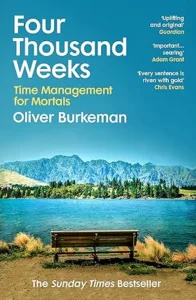
The title of the book comes from Burkeman’s rough estimate that the average modern lifespan is now somewhere around 4000 weeks (or around 76 years). And seeing this on paper, where you can colour in each dot as a week goes by, might make some of us feel anxious. Anxious that there is still so much we haven’t done, so many versions of ourself that we are yet to become. All the places we haven’t seen, and opportunities not yet taken.
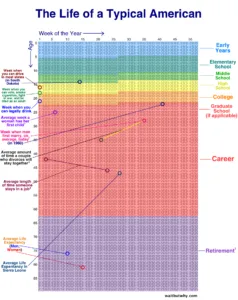
Instead of feeling anxiety, Burkeman argues that we should embrace our limits as mortal human beings and consciously decide what we cannot do and elect which areas to gracefully neglect, or which things we will very likely fail at. And this is not just an efficiency exercise where we hone in on our most productive activities at the cost of everything else. Burkeman also praises the virtue of purposeless leisure: that we should have things we simply enjoy doing, without trying to monetize them or optimize them. For all of us who enjoy sports, or crafts, or other skills or hobbies, the important point isn’t to become a world champion, but to enjoy the time spent.
The core message of Four Thousand Weeks is not that we should end up being apathetic. Or fail to commit to making something of our lives. Instead, Burkeman’s point is that we have to recognise our own limitations and liberate ourselves from the trap of thinking that we can be and do all things in a single finite lifetime. Peace of mind comes from acceptance of our mortal limits.
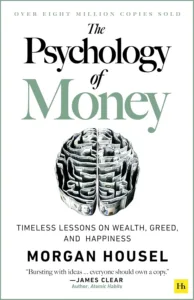
Actually, the last riddle above, that you can never buy more time, is a bit controversial. Morgan Housel, in one of my favourite books, “The Psychology of Money”, argues that one of the most important things we can do with wealth, is to leverage it to make better use of our time. To delegate or outsource things that aren’t a constructive part of our limited lifespan.
These things might be very different from one person to another. Some people will gladly pay someone to cook for them or they buy ready-made meals, whereas for others, cooking is a hobby they enjoy and find relaxing. Some people enjoy driving or flying or sailing, others would rather let someone else be at the wheel. Many parents, no matter how much they love their offspring, are very grateful that schools and clubs for sports and other activities exist, so that they aren’t responsible for every waking moment of the lives of their children (especially by the end of the long summer holidays!) 😄
Housel’s key point about time is that having control over it is a form of wealth. He argues that true wealth is about being able to do what you want, when you want, with whom you want, for as long as you want. Clearly, none of us are completely free of obligations to others. But, as an example, the real value of wealth may be in having a greater degree of autonomy and flexibility over your daily life and your calendar – such as being able to take time off, or wait for a better job opportunity or exit a toxic work environment, or to slow down the intensity of our work later in life.
Questions about time and its intersection with money are a natural part of financial planning. In my work I am often supporting clients with planning their future or adapting to changes in their circumstances. For example, retirement often isn’t a sudden withdrawal from their current life, to sit in a deck-chair in the garden. Instead, it’s much more likely to be a phased process of decreasing pressure and increasing leisure. Of increasing choice and flexibility. But this starts with knowing that you have sufficient wealth, and clarity on what that wealth will support you in doing, to be confident about your path to the future.
Have you got a clear understanding of how you want to spend your time after full-time work? How confident are you about your freedom and flexibility in the future?
Please get in touch for a free initial chat if you’d like to discuss your retirement plans or financial planning with me further.
None of the above is financial or investment advice and you should speak to me or someone else professionally qualified to give you advice specifically tailored to your circumstances. All information is correct at the date of publication. There can be no guarantee that such information is accurate as of the date it is received or that it will continue to be accurate in the future.


 Get in touch

 Production


