
25 Feb 2026
Thinking: Do you focus your energy or your time?
The late Scott Adams was most famous as the author of the “Dilbert” comics. Not surprisingly for those familiar with this work, some of his views were a bit unorthodox, even controversial. But “Reframe Your Brain” is his book about how we ‘frame’ things: what our mental approach to a situation or scenario is and how that can drive so much of our potential success.
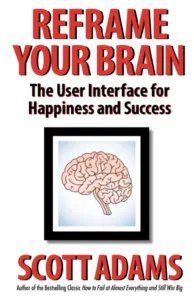
One really useful frame proposed is that instead of managing time, you should look to manage your energy.
It can be easy to get sucked into a diary structure, and to do things in a way that neatly fills this, even when it begins to be a drag on our best abilities. Adams suggests that we should consider what our energy level is like at different times of day, and, where practicable, do our most important work when our energy is best. He is focused on creative work, and says, “I can produce more in 15 minutes with the right energy than 4 hours with the wrong energy”.
But clearly this idea applies to many of us and our objectives and tasks. There will be a good time of day for complex tasks, strategic thinking, or nuanced inter-personal discussions. And other better times for administrative work, or exercise, or other activities where a different energy is useful.
Adams takes this ‘frame’ a step further however, and suggests that we should consider carefully the energy ‘feedback’ that we get from different choices. If a particular choice gives us a different feeling of positive energy, or for example a career path or a person we spend time with, or the reverse – it makes you feel like your energy is being sapped – you should not ignore the feeling. Also, your least important tasks, Adams argues, should be jettisoned or at least severely postponed because they won’t have as much impact. Even if it is tempting to try to tick all things off your to-do list.
Beneath this is also a direct suggestion that we should favour options that give us more freedom – agency over how we schedule and spend our energy and time – so we can ensure that we give the best of ourselves.
I have in my own way already adopted some of these ideas when helping people with their financial planning. From bitter experience, I now avoid attempting meaningful conversations with clients after the end of their work day. By then, they are too spent to be able to think properly, and I am often also no longer able to focus as clearly or fully on what they are trying to tell me. This doesn’t make either of us unusual. There is increasing research suggesting that fatigue and overloading, can cause all sorts of professional and personal errors (see Footnote 1).
A sometimes overlooked part of my role as a financial planner is helping people to maximise their energy. Worry over important long-term concerns that are being repeatedly pushed onto the back-burner can cause an on-going drain on your energy. As can confusion or indecision about the future. I’ve often seen clients experience a significant sense of relief when they get a plan in place that helps them clearly visualise what they want to achieve with their personal finances, including how to execute this, and more importantly, why.
Would you like to have a meaningful conversation about your money and its place in your life, including how it will support your future plans?
Get in touch for a free initial chat to see how I may be able to help you.
None of the above is financial or investment advice and you should speak to me or someone else professionally qualified to give you advice specifically tailored to your circumstances.
Footnote 1 – https://www.hssib.org.uk/patient-safety-investigations/the-impact-of-staff-fatigue-on-patient-safety/launch-report/


 Book a free introduction chat
 Production


